


















We know how much you love water - and that's why we also know how important it is for you to know the current water temperature. Here on this page, you'll find today's water temperature, which we update daily, so you can quickly see how warm (or cold) the water is right now.
We update the table daily, and the figures are calculated as an average of the sea temperature in and around Ireland from the Irish Meteorological Institute.
Read on below to see our recommendations and guidance on when the water is suitable for a swim and when it's pleasant to bathe.
In principle, you can go in the water all year round - Shout out to all you brave winter swimmers 😉 - but some times are naturally more ideal than others.
Water temperature month by month
If you want to know when the water is warmest during the year, it's worth looking at the typical averages over the months throughout the year. While the live table above shows today's figures, this table gives you an idea of what you can normally expect, on average each year - month by month.
When is the water warm enough to swim?
The short answer is that "warm enough" depends as much on you as on the number on the thermometer. Some happily jump in at 12 degrees, while others prefer 20 plus. But the temperature gives you a good indication of what you're getting into and how long it's wise to stay in the water. Here's a quick overview of the most important zones.
Below 5 degrees
It's simply too cold here. Even with a wetsuit, it becomes uncomfortable, and it's not a place you should dive in for a swim without good reason and plenty of experience.
6-10 degrees
Still very cold, but possible if you take precautions and take breaks along the way. Most people can stay in the water for about 30-45 minutes, and a good wetsuit makes a noticeable difference.
See our selection of wetsuits here.
11-14 degrees
Now we're approaching something that feels swimmable. It can still sting a bit in your hands and face when you go in, but your body gets used to it, and you can typically last about an hour.
15-19 degrees
Here it's manageable for most. The body needs a moment to acclimatize, but once the initial chill has passed, you can keep going for quite a while.
20 degrees and above
Now it's really comfortable. Most don't need a wetsuit at all and can just enjoy being in the water as long as they like.
If you want to dive deeper into how long you can stay in at each temperature and what you should wear and bring with you, you'll find the full rundown in our comprehensive guide: Open Water swimming in different temperatures.
When is the water temperature perfect for the beach?
We usually say that the average person first jumps into the water at the beach when the water is around 18-20 degrees and above.
Here you'll be able to spend a little longer in the water without freezing, and you avoid the gasping breaths because the water is too cold.
And maybe you think that sounds a bit high; But while the previous section was about a good water temperature for swimming and using your body, a beach trip is something entirely different. Here, the body doesn't get as warmed up by movements, so the temperature should ideally be a bit higher.
However, it should be noted that children need higher water temperatures and more warmth to avoid freezing. That's why at Watery, we've developed a range of different products to make the experience warmer and more comfortable for your child:


The discount code can be used by all new customers on all products on the website, including the products recommended here in the article. What are you waiting for? Get more out of your time in and on the water!

GET A DISCOUNT CODE WITH 10% OFF
What should you do at different water temperatures?
The colder the water, the more you need to dress up. Here's the short version:
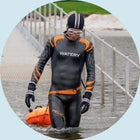
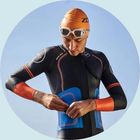
6-14 degrees: Put on a proper neoprene suit – preferably supplemented with neoprene socks, a hood, and gloves, so your hands and feet don't give up first. Here we recommend: Wetsuits and Neoprene socks.
15-20 degrees: Now the suit is usually enough on its own. If your feet are cold, put on the socks.
20 degrees and up: Most can do without the suit entirely. A swimming cap and a pair of goggles are always nice to have. Here we recommend: Swimming caps & Goggles
If you want the full rundown on suits, layering, and the right thickness of neoprene, you'll get it all in our guide: Guide to choosing a wetsuit
When can you start swimming in the sea?
Later than you think. The sea is slower than the air, so it lags several weeks behind the seasons: it's still cool well into spring but retains warmth well into autumn. Therefore, the sea is typically warmest at the end of summer, not when the air and sun are warmest.
However, it's often said that July is the best month to go in the water, as both the water and air have the highest temperature.
But luckily, you don't have to wait for the warmest weeks. With the right gear, you can easily extend the season at both ends, right into winter swimming. We're ready to help you with recommendations for the right equipment.
Can you swim in cold water?
Yes, you can, and many people do. Swimming in cold water and winter swimming has become wildly popular because it offers a completely different experience than the swimming pool: fresh air, nature around you, and the special, invigorating feeling when you come out of the water.
However, it just requires a bit more preparation and respect for the conditions when you dive into the cold water.
Our best advice when you want to swim in cold water
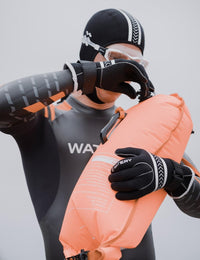
The most important thing is to dress for it and not stay in the water too long. With a good wetsuit and some neoprene accessories, the experience becomes both safer and warmer, and you can extend the season well into the cooler months. Here we recommend:


If you want the full picture of how cold the water can be, how long you can stay in, and what equipment you need, you'll get it all in our comprehensive guide, which you can find here
